Showing posts with label Books. Show all posts
Wednesday, February 15, 2012
We are all writers
Some of my favorite books for launching Writer's Workshop at the beginning of the year are books that help my students realize that they are authors too! Here's a small compilation of a few of my faves...
Mentor Texts
| 1. Saturdays and Teacakes by Lester Laminack {This is one of my all time favorites. It is beautifully written, and lends itself to teaching personal narratives and memoirs. I love the repetition, the white space, the interesting way he writes dialogue without quotation marks, and I love the nostalgia.} | |||||||
| 2. Emma Kate by Patricia Polacco {This book is fabulous for teaching synthesis. It's all about a friendship between an elephant and a little girl. It makes the kids wonder whether it's fantasy and they really are friends or if the elephant is an imaginary friend. They change their thinking a few times, and in the end, they learn that the elephant has an imaginary child. I always re-read it one more time once they make this realization!} | |||||||
| 3. Fireflies by Julie Brinckloe {This book always tops my list for teaching inferring! It's beautifully written, and it helps kids connect to their own prior knowledge!} | |||||||
| 4. The Great Fuzz Frenzy by Susan Stevens Crummel. {Of course, I have a soft spot for golden retrievers, but beyond that, this is a fabulous book for teaching predicting! It's also very easily tied into the bucket-filler/bucket-dipper concept. I love Crummel's fun placement of the text!} | |||||||
| 5. The Memory String by Eve Bunting {Beautiful story! Great for making T-S connections!} | |||||||
| 6. The Stranger by Chris Van Allsburg {Great story to teach inferring! The kids have to pay close attention to the clues to infer that the stranger is Jack Frost. This is probably better suited for upper-elementary, because it's a definitely not obvious, but that's why I love it!} | |||||||
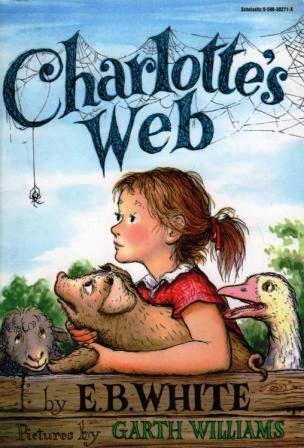
| 7. A Day's Work by Eve Bunting {This is a great story about "the important things" like honesty. It's a great story about a young boy's relationship with his grandfather. 8. Owl Moon by Eve Bunting {I love this book! I have taught just about everything from mental images to poetic devices to owl adaptations with it. In fact, I have a pretty cross-curricular unit for sale in my TpT store that I used with my kiddos in my old school district. It's so much fun!} 9. Charlotte's Web by E.B. White {Such an oldie, but a goodie. I LOVE Charlotte's Web, because you can teach so much with it, if you break it into manageable chunks. I especially love how it lends itself to teaching about imagery and sensory details during the barn scene. I also totally LOVE the characters. I mean, who doesn't love Charlotte and Wilbur?! Of course, this is another book I used to extensively teach with back in the day, and I also have a unit that accompanies it.} 10. Love That Dog by Sharon Creech {I always like to read this book to launch discussions about the writing process. I also love it because it approaches poetry in a fresh way, and it exposes kids to the classics in a non-threatening way. It's also great for the kids who say they don't like to write.} | |||||||
| 11. | |||||||
| 12. The BFG by Roald Dahl {This is one I truly enjoy reading for the sake of reading it. The kids LOVE the story... I think it's because of the whizzpopping. Of course, it's Roald Dahl, so I have to soften a few things here and there, but this is the only book I have a consistent character voice for. I have cultivated my BFG voice over the years, and the kids eat it up with a spoon!} | |||||||
| 13. The Lorax by Dr. Seuss {I should be excited that they are making a movie about this book, because I LOVE IT, but I'm sad they are adding so much to a book that I think is absolutely perfect. I love the rhythm, the lesson, the adorable Lorax, and I even sort-of have a soft-spot for the Once-ler. This is a just-plain-magical book that teaches about environmental concerns in a kid-friendly way. It's wonderful for making connections and starting an Earth Day discussion! The word "unless" carries so much weight...} | |||||||
| Okay, I'm going to have to take this another direction, because this is taking me FOREVER, and I am having a really difficult time narrowing it down. :) So, here's what I'll do. I'm going to point you in a few different directions if you are interested in more. First of all, feel free to check out my Donor's Choose link on the sidebar. There aren't any active grants right now, but I was fortunate to have a few funded last year, and several of them were for books that I salivated over and love. If you click on the links and scroll to the bottom of each page, you will see the book lists I picked out. In addition, if you haven't read them, you need to read the following teacher books that address reading workshop. Many of them make suggestions for books based on the reading strategies. I could get carried away with this too! These are my favorite reading resources at the moment. If you're impatient, you can also find lists online, but I highly recommend taking a gander at these fabulous books. They have totally sculpted and changed me as a teacher over the last few years. You can find book lists HERE... and all over the web. |
Leads and other things
Shortcut by Donald Crews
- strong beginning and end
- helps students understand that one small moment of time can be captured and told with excitment and strong emotion
Fireflies by Julie Brinckloe
-helps student understand the importance of a beginning that is not too far away in time from themost important event of the story
Crab Moon by Ruth Horowitz
- shows students how they can span a larger period of time.
-Transitioning from one essential moment to the next and skipping everything in between.
Widget by Lyn Rossiter McFarland
-usually at the end of first grade, beginning of second (as children become proficient with words and adding details) the slump of sun-up to sun-down begins.
- clear beginning, middle, and end. Story map.
Creating a good lead:
Establishing the setting
- The Girl on the High-Diving Horse by Linda Oatman High
-Angels in the Dust by Margot Theis Raven
-Wingwalker by Rosemary Wells
- Own Moon by Jane Yolen
-Tulip Sees America by Cynthia Rylant
-Amber on the Mountain by Tony Johnson
Developing the main character:
-The Grannyman by Judith Schachner
-Amazing Grace by Mary Hoffman
-The Recess Queen by Alexis O'Neill
-Manac Magee by Jerry Spinelli
Introducing Characters Through Setting:
-Widget by Lyn Rossiter McFarland
-Tomas and the Library Landby Pat Mora
Lead--> Describing the weather (strong verbs and adjectives)
- Too Many Tamales by Gary Soto
- Cocoa Ice by Diana Applebaum
-Sugarbush Spring by Marsha Wilson Chall
- From Poppa by Anne Carter
- Stranger in the Woods by Carl R. Sams 2 and Jean Stoick
- strong beginning and end
- helps students understand that one small moment of time can be captured and told with excitment and strong emotion
Fireflies by Julie Brinckloe
-helps student understand the importance of a beginning that is not too far away in time from themost important event of the story
Crab Moon by Ruth Horowitz
- shows students how they can span a larger period of time.
-Transitioning from one essential moment to the next and skipping everything in between.
Widget by Lyn Rossiter McFarland
-usually at the end of first grade, beginning of second (as children become proficient with words and adding details) the slump of sun-up to sun-down begins.
- clear beginning, middle, and end. Story map.
Creating a good lead:
Establishing the setting
- The Girl on the High-Diving Horse by Linda Oatman High
-Angels in the Dust by Margot Theis Raven
-Wingwalker by Rosemary Wells
- Own Moon by Jane Yolen
-Tulip Sees America by Cynthia Rylant
-Amber on the Mountain by Tony Johnson
Developing the main character:
-The Grannyman by Judith Schachner
-Amazing Grace by Mary Hoffman
-The Recess Queen by Alexis O'Neill
-Manac Magee by Jerry Spinelli
Introducing Characters Through Setting:
-Widget by Lyn Rossiter McFarland
-Tomas and the Library Landby Pat Mora
Lead--> Describing the weather (strong verbs and adjectives)
- Too Many Tamales by Gary Soto
- Cocoa Ice by Diana Applebaum
-Sugarbush Spring by Marsha Wilson Chall
- From Poppa by Anne Carter
- Stranger in the Woods by Carl R. Sams 2 and Jean Stoick
Mentor Texts: Teaching Writing Through Children's Literature, K-6 [Paperback]
Lynne R. DorfmanTuesday, February 14, 2012
What did we do over break/snow day?
To incorporate our snow days into Language Arts, I had the kids write down three sentences about what they did over the break. The next day, we went back and edited our writing to make sure all of the necessities were there (capital letters, finger spaces, punctuation, etc). Then, we traded papers with our neighbors to do peer editing. On Thursday, after another snow day Wednesday, I had each student draw a picture to match their writing. I glued and laminated each piece and put it together to make a book. It is wonderful! I can't wait for them to see the finished product tomorrow!
Personal Narritives. Amber Brown
Amber Brown. Here's how I did it...
After reading these 2 books:
we talked about the friendship that Amber shares with her best friend, Justin Daniels. From there, we began writing our personal narratives about our best friends. Here is the story that I modeled {I showed it to my friend, Sarah, and she cracked up :)}:
I had the students close their eyes and imagine their best friend: what they look like, things they like, what they do with their best friend, why they are best friends. We spent a lot of time talking about things to include in their papers. First, I had the kids write a rough draft in their journals. Then, I helped them edit the spelling and punctuation.

Love, Splat Valentine's Day
For Reading/Writing we read "Love, Splat" and made a text-to-self connection with a little writing creativity from the one and only, Cara Carroll :)
The students finished the sentence stem "I feel loved when..." Then they were able to put their little Splats together!
We are all special and unique
This lesson came from Scholastic.com. I read "Stand Tall Molly Lou Melon" to the class and we talked about how Molly's grandma helped her feel special. Then we read the poem that was on the Scholastic lesson plan called "Sunny Sunflowers," and discussed how we are like sunflowers because we are all special and unique
On each petal, they wrote a sentence telling what made them special. This really helped me see who could form sentences on their own, and who needed help!
Sunday, February 12, 2012
The Story of the Frog Belly Rat Bone
by Timothy Basil Ering
Students need one sheet of paper folded in 4ths. and a pencil/crayons
Cover the cover with a folder.
Read a few pages give the students 3 minutes to draw and color
Students need one sheet of paper folded in 4ths. and a pencil/crayons
Cover the cover with a folder.
Read a few pages give the students 3 minutes to draw and color
Tuesday, November 22, 2011
Teaching books
Comprehension Connections: Bridges to Strategic Reading [Paperback]
Tanny McGregor
Interventions that Work: A Comprehensive Intervention Model for Preventing Reading Failure in Grades K-3 (Interventions that Work Series) [Paperback]
Linda J. DornThe Book Whisperer: Awakening the inner reader in every child
Donalyn Miller
The Daily 5
Gail Boushey
Thursday, November 10, 2011
Books to Read Aloud
Primary
~ The World According to Humphry
Intermediate
~ The Westington Game
~ The Maze Runner
~ The World According to Humphry
Intermediate
~ The Westington Game
~ The Maze Runner
5th Grade Writing and Books to accompany
All the Places to Love by Patricia Mc Glachlin
~ write about favorite places to be
“Twilight Comes Twice" by Kate Kiesler
~ ?
The Relatives Came by Cynthia Rylant
~ Write about a time when you were with your family or had a sleep over
Snow by
~?
When I was Little and When I was 5 by
~ Work on repeating sentences
My Father the Dog by Elizabeth Bluemle
~ Who acts like an animal? Or maybe does your animal act like a human?
"Sheila Ray, the Brave" by Kevin Henkes
~ Work on gathering stories for their memoirs
Thank You, Mr. Falker by Patrica Palacco
~A time when someone bullied or you were a hero
Zoom by Istvan Banyai
~ a small idea can turn into a descriptive essay
~ write about favorite places to be
“Twilight Comes Twice" by Kate Kiesler
~ ?
The Relatives Came by Cynthia Rylant
~ Write about a time when you were with your family or had a sleep over
Snow by
~?
When I was Little and When I was 5 by
~ Work on repeating sentences
My Father the Dog by Elizabeth Bluemle
~ Who acts like an animal? Or maybe does your animal act like a human?
"Sheila Ray, the Brave" by Kevin Henkes
~ Work on gathering stories for their memoirs
Thank You, Mr. Falker by Patrica Palacco
~A time when someone bullied or you were a hero
Zoom by Istvan Banyai
~ a small idea can turn into a descriptive essay
No Peeking!
Making books fun!
Before the school year started 5th grade piled all the books from their classroom library into one giant pile. The teacher draped a sheet over it and after the first week of school she unvailed it. I heard the anticipation was unbelievable.
They then sorted the books so they would know what books they have in their library and where to find it.
For the younger kids this would be great.... but the older kids I've already started to sort the books. I've been sorting them by genre and putting a colored dot on it so kids konw what it what. I guess I thought I'd be sorting them alphabetically.... but now I'm wondering if there might be a better way.
Before the school year started 5th grade piled all the books from their classroom library into one giant pile. The teacher draped a sheet over it and after the first week of school she unvailed it. I heard the anticipation was unbelievable.
They then sorted the books so they would know what books they have in their library and where to find it.
For the younger kids this would be great.... but the older kids I've already started to sort the books. I've been sorting them by genre and putting a colored dot on it so kids konw what it what. I guess I thought I'd be sorting them alphabetically.... but now I'm wondering if there might be a better way.
Wednesday, November 9, 2011
3rd grade books
Recess 20 Below- Sharing our thinking
The Red Book- No pictures, so telling our thinking as we went through the story
How Many Days to America- recording thinking throught the book (think marks)
Fly Away Home- Text-to-world connections
The Red Book- No pictures, so telling our thinking as we went through the story
How Many Days to America- recording thinking throught the book (think marks)
Fly Away Home- Text-to-world connections
Saturday, October 22, 2011
Nonfiction Book Clubs
Before implementing book clubs:
~ Immerse students in genre of nonfictoin text using a variety of books for explorating and investigation
~Condcut whole class genre study on nonfiction text focusing on text features and reading strategies
~ Have students write nonfiction books incorportating text features previously studied
~ Model using "think alouds" while reading nonfiction books to class (think alouds include explict language discribing reading strategies being used)
~ Lead whole class discussion of appropriate conversational moves while participating in nonfiction book clubs
~Have class practice participating in nonfiction book clubs to gain understanding of how they work
~Interview students to determine which books to select for book clubs
Implementation:
~Teacher presents students with nonfiction books and gives brief "book talk" about each one
~Students select books *books can be rotated weekly so all students get to read all books*
~Teacher sends note of explanation home to parents stating that students should read the book and complete a journal page (journal ideas include: questions while reding, interesting concpets for discussion, new information gained)
~ Book clbus meet according to rotation schedule (students bring books and journal pages to discussion; anchor chart with "conversational moves" available if needed)
~STudents discuss book and journal notes while building on responses of each other *teacher participates as needed)
~Teacher observes and takes field notes for assessment and reflection purposes
~Students reflect on book club process, nonfiction genre, and new information
Guided reading groups happen Monday, and Tuesday,
Book clubs Wednesday, Thursday
Book discussion Friday
Students can read to an adult, partner, alone, or be read to.
Nationa Geographic for Kids great books
~ Immerse students in genre of nonfictoin text using a variety of books for explorating and investigation
~Condcut whole class genre study on nonfiction text focusing on text features and reading strategies
~ Have students write nonfiction books incorportating text features previously studied
~ Model using "think alouds" while reading nonfiction books to class (think alouds include explict language discribing reading strategies being used)
~ Lead whole class discussion of appropriate conversational moves while participating in nonfiction book clubs
~Have class practice participating in nonfiction book clubs to gain understanding of how they work
~Interview students to determine which books to select for book clubs
Implementation:
~Teacher presents students with nonfiction books and gives brief "book talk" about each one
~Students select books *books can be rotated weekly so all students get to read all books*
~Teacher sends note of explanation home to parents stating that students should read the book and complete a journal page (journal ideas include: questions while reding, interesting concpets for discussion, new information gained)
~ Book clbus meet according to rotation schedule (students bring books and journal pages to discussion; anchor chart with "conversational moves" available if needed)
~STudents discuss book and journal notes while building on responses of each other *teacher participates as needed)
~Teacher observes and takes field notes for assessment and reflection purposes
~Students reflect on book club process, nonfiction genre, and new information
Guided reading groups happen Monday, and Tuesday,
Book clubs Wednesday, Thursday
Book discussion Friday
Students can read to an adult, partner, alone, or be read to.
Nationa Geographic for Kids great books
Tuesday, October 18, 2011
Writing Workshop Speaker Book suggestions
In November by Cynthia Rylant
Imagine a Day (Imagine a Night) by Sarah L. Thomson
If... by Getty Trust Publications
These books can be used to make classroom books.
Imagine a Day (Imagine a Night) by Sarah L. Thomson
If... by Getty Trust Publications
These books can be used to make classroom books.
Friday, October 14, 2011
Teaching books
Catching Readers Before They Fall
Knee to Knee Eye to Eye
Minilessons for Literautre Circles
Teaching with love and logic
Letters to a Young Teacher
The Death and life of the Great American School System
Knee to Knee Eye to Eye
Minilessons for Literautre Circles
Teaching with love and logic
Letters to a Young Teacher
The Death and life of the Great American School System
Touchtone books
Fire Flies by Julie Brinckloe
Miss. Smith's Incredible Storybook by Michael Garland
Sunday, October 9, 2011
"Books can help you think about important things in new ways"
Books like....
Miss Maggie by Cynthia Rylant
Something Beautiful by Sharon Dennis Wyeth
If you Listen by Charlotte Zolotow
Olliver Button is a Sissy by Tomie dePaola
Fireflies by Julie Brinkloe
gives readers access to characters who experience ups and downs of childhood, might help children gain new perspectives.
Authors often want their readers to take away something from their story.
Reading with Meaning by Debbie Miller Chapter 8
Miss Maggie by Cynthia Rylant
Something Beautiful by Sharon Dennis Wyeth
If you Listen by Charlotte Zolotow
Olliver Button is a Sissy by Tomie dePaola
Fireflies by Julie Brinkloe
gives readers access to characters who experience ups and downs of childhood, might help children gain new perspectives.
Authors often want their readers to take away something from their story.
Reading with Meaning by Debbie Miller Chapter 8
Subscribe to:
Posts (Atom)


